Should I Display My Own Reproduction Art on Website
When I graduated from art schoolhouse, I had mastered colour theory and brush techniques and limerick—but didn't know the outset thing nearly concern. How tin can I sell art and paintings online? How would I market myself? What steps did I demand to have to sell my art? How should I price my work, and what would I charge for shipping? At the time, the creator tools and channels to amplify and sell your own art online were practically nonexistent.
In my very showtime week equally a working artist, I learned a hard lesson: to succeed in art, you must too succeed in business concern.
For gallerists and curators, the shift in how we buy and sell in the last 2 decades has allowed these businesses to correspond more artists and expand into selling affordable art prints online to achieve larger audiences worldwide.
How to sell art online

Whether you're a creator or a curator looking to make coin selling art online, this how to sell artwork online and in person guide is for you. We consulted experts and successful artists for their advice on everything you need to know to sell your art, from marketing to pricing to shipping. You tin besides use this guide to learn how to sell your photos online as fine art.
Meet the art experts
We reached out to experts in the art world—two artists and a gallerist—actively making their living past selling art online and asked, "how exercise you sell fine art online?" among other things. In this guide to selling your own artwork, their anecdotes will be woven into practical and actionable communication for any artistic entrepreneur.
True cat Seto, owner and artist, Ferme à Papier

Cat Seto is an creative person and writer, and the founder of Ferme à Papier, a San Francisco–based studio and bazaar representing unique goods from independent West Coast designers. Her stationery has appeared in multiple publications and landed her partnerships with brands like Anthropologie and Gap. Prior to the pandemic, Cat closed the retail arm of her business to refocus and find a new location. The recent detest crimes targeting the AAPI (Asian American and Pacific Islander) community take influenced her need for change. "I have decided that I am at a time and place in my business organization in which my collections need to represent themes which matter to me and those around me," she says.
Maria Qamar, artist, Hatecopy

Take note of our adjacent expert specially if you desire to know the best way to sell paintings online. About famously known by her artist moniker, Hatecopy, Maria Qamar quit her advertizement career to focus on fine art when her pop art paintings began to grab burn down on Instagram. The success didn't happen overnight. "I did contract work hither and at that place," says Maria. "When you're starting out, you're earning zero dollars." Her full-time job, however, taught her business skills that were critical to selling her own artwork, getting off the ground, and marketing herself as an artist. Now she works full fourth dimension on her art, selling her own artwork in multiple formats, from art prints to printed merch. She too published a book, Trust No Aunty, in 2017.
Ken Harman, curator and gallerist

Ken Harman is the man behind the art empire that includes Spoke Art, Hashimoto Gimmicky, and publishing visitor Paragon Books. Together, these businesses correspond many global artists through concrete galleries, online shops, and pop-up exhibitions. Unlike Maria, Ken didn't have a chance to transition slowly at the showtime. When he was unable to secure a temporary popular-up location for a curated show, he signed a two-year charter on a space. "I really didn't have any other options," he says. "I just pulled the trigger."
What'due south correct for y'all: selling your own fine art or selling works by other artists?
At that place are two ways for how to sell your art: create or curate. True cat built her career on both by creating and selling her own work and representing the work of others in her bazaar. Which ane is right for you lot? Allow'southward explore the two avenues in this guide to how to sell artwork online.

Every bit an creative person, you are the creator, producing original fine art and/or reproductions of originals and selling directly to your customers or indirectly through a gallery, retail partner, or agent. It'south never been easier for artists to sell directly, with emerging creator tools popping up seemingly every 24-hour interval. Depending on your style and medium, choose a sales channel where your desired audience hangs out. This is arguably the easiest mode to sell fine art online for many.
Maria runs her own online shop, where she sells prints and merchandise, eliminating the middleman and keeping her costs low. But she likewise leans on relationships with experienced galleries for exhibiting and selling own artwork. If you're learning how to sell your art, note that galleries can expose your work to new audiences. They may also have access to resources and professionals to help promote, exhibit, handle, and ship artwork.
Curate

If you're not personally an artist simply you have a great eye and a love of the fine art world, you can however get into the game of selling art as a curator. Some artists may be disinterested in marketing or figuring out the best way to sell art online and instead rely on gallerists, curators, and retail partners to handle this attribute of the business. As a partner to artists, you make a percentage of the selling price in exchange for your business knowledge and service.
At that place are several means to work with artists to figure out the best fashion to sell art online for you—exist it selling originals or prints to licensing works to be printed on merchandise or used in publication. "About galleries offering an industry standard 50% assignment split for original art," says Ken. "The artist provides the artwork, nosotros do our best to sell it." Spoke also operates its own impress shop, selling limited-run prints of works by the artists it represents—offer a broad range of cost points for their fans.
What art to sell: originals or reproductions?
As an artist, you lot may choose to sell your art, reproductions of that work, or both. The best way to sell art online will depend on the nature of your art and your chosen medium. Fine artists using classic mediums and selling at high toll points may choose to only sell originals, for instance, while digital art, which tin be reproduced without loss of quality, is not bad for prints and merch. Withal, virtually art created in 2D mediums have multiple options for generating unlimited sales on a single work.
🎨 Consider the following options when determining the best manner to sell your art online:
- Original art such as paintings, drawings, illustrations (Note: you lot tin can sell both the original art also as prints of the same work.)
- Limited- or open-edition prints (framed, unframed, or prints on canvass)
- Digital downloads (desktop wallpaper, templates, print-at-dwelling house fine art, etc.)
- Custom art made to order from a client asking or commissioned by a business organisation (Annotation: Generally, this art would be one of a kind and not sold once again as a reproduction.)
- Trade (your art printed on hats, mugs, t-shirts, enamel pins, greeting cards, stationery, etc.)
- Repeat prints on cloth, wrapping paper, or wallpaper
- Licensing work to other brands or publications (great for illustrators and photographers)
- Collaborations with brands (express drove sold through the partner brand's store)
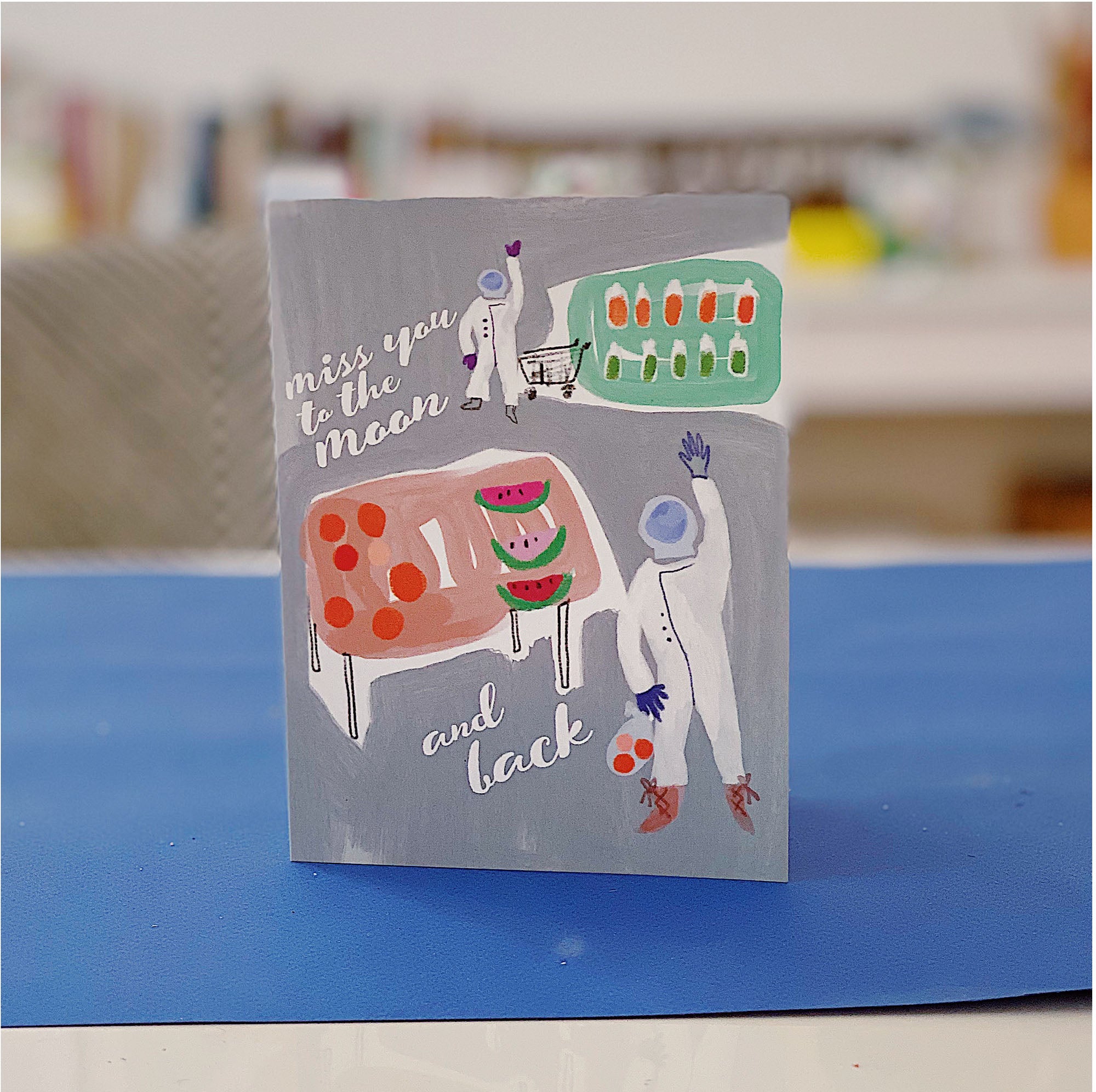
Some mediums, like sculpture, are more than difficult to reproduce or use for merchandise applications—you may consider a different road if y'all're interested in the easiest manner to sell art online. But for those impossible to browse and print, there are nevertheless means to generate additional income from a single design. For example, dirt works may use the same mold to generate like pieces, and 3D designs can exist created over and over with a 3D printer.
Reproductions of art: open or express edition?
Reproducing art on t-shirts, mugs, or art prints ways that a single work tin conduct fruit indefinitely. If yous're looking for how to sell artwork similar paintings as prints, there are pros and cons. You can choose to sell an unlimited number of products (otherwise known every bit open up edition). Notwithstanding, some galleries, like Spoke, opt for a express edition model when you sell your art (in that location are just a certain number of prints produced) on many of the works they represent.
The effect is much like that of a express time offer—creating a sense of scarcity and urgency is an fantabulous marketing strategy. For Ken, nonetheless, the decision to limit print runs goes deeper. "Nosotros work really hard to find things that are very special to sell. Things that are special should be treated like they're special," he says. While Spoke may be able to brand more money selling prints as an open edition, the choice to limit them adds to the value of the art.
Limited edition has its drawbacks, nonetheless. "A lot of the things that we sell take secondary market place values," says Ken, meaning that limited edition pieces may sell for inflated prices on the resale market (think express-edition sneakers) considering the demand is loftier. To help minimize reselling, Spoke volition limit quantities of sure prints per customer. It's besides congenital a blacklist of known resellers. "Making certain that the real fans are actually the ones who are able to get the things that we sell is always a priority," Ken says.
How exercise y'all impress art and choose printers?

Agreement how to sell your artwork comes down to getting very friendly with a printer, whether that's your at-home inkjet or a company that handles the task for you lot. There are multiple options, from DIY to completely easily off, to help you sell fine art prints and other merch to your audience.
DIY printing
It's possible to showtime selling your own artwork by creating quality prints yourself with the high-quality paper, ink, and home office printer. Equally a new creative person, this method can keep costs low, but it's non the style to go if you want to know how to sell your art sustainably so you can scale over time. "In the beginning, I would impress, package, and deliver by hand every unmarried affiche that was ordered," says Maria. "At some point the book became so much that I couldn't brand time to depict. I was spending all of my days delivering and in transit." This method is usually express to selling art prints on paper, but some specialty printers may permit you to print on canvas paper or fabric designed specifically for this purpose.
Using a printing company
A local or online printing visitor can reproduce your work en masse and tin can even offer bulk discounts if you lot are printing many of the aforementioned piece. This can be the best way to sell art online if y'all have a pocket-sized catalog of just a few works that you sell consistently and have a upkeep to purchase inventory upfront. With this method of how to sell artwork online, you lot volition still be responsible for your own packaging and shipping.
It's important that we are the final sets of optics inspecting, packaging, and shipping the product to our customers.
Cat Seto, Ferme à Papier
While a print-on-demand model for custom clients and orders is the best style to sell your art online for True cat, she often prints large batches for collection releases. In either case, the prints arrive at her studio kickoff, rather than aircraft directly to the customer. "It's of import that we are the last sets of optics inspecting, packaging, and shipping the product to our customers," she says.

Impress on demand
Print on demand is the well-nigh hands-off and versatile of options and possibly the easiest way to sell art online, especially if you plan to sell your work printed on merch like t-shirts or caps. Impress-on-demand companies generally integrate with your online shop and permit you to upload your designs, which are so printed and shipped directly to each customer when yous receive an social club. This is a great option if y'all want to know how to sell artwork on a budget, as there is little upfront investment with no need to buy equipment or inventory.
When the number of orders exceeded her capacity to print and ship work herself, Maria upgraded to using a print-on-demand company. "All I take to do is upload and let it do the work for me," she says. "At present I tin can focus on actually creating the artwork and connecting with people."
💡 Tip: Before you outset selling your own artwork this way, request samples from the printer so you can inspect the colors and quality of the impress. This is specially important if printed items will be sent directly to your customers.
How practise you photo and browse art?

Photographing and representing your products clearly and accurately is important for any online business. Without the power to feel a product, customers need to get the best sense of what they're buying through clear and detailed images. Selling art online is no exception.
"If you accept a bad image of your piece of work or the image doesn't represent the work accurately, you're going to have a harder time selling information technology," says Ken. Or, you'll be stuck dealing with unhappy customers and processing returns.
Product photography when you sell your fine art is a petty trickier than other products, and a basic light setup may still cause glare or color irregularities. Consider hiring a professional to shoot larger works or art with whatsoever three-dimensional or sleeky elements.
If you accept a bad image of your work or the paradigm doesn't represent the work accurately, you're going to have a harder time selling it.
Ken Harman, Spoke Art

For 2D works, however, Ken recommends scanning as an affordable and constructive alternative to photography. Though his facility has a photography setup for shooting fine art, many artists submit their works to Spoke as scans because they need the digital file for their ain athenaeum anyway. "The most cost effective manner to practise that is to become a desktop scanner and scan the piece of work in parts and stitch it together digitally," he says. "If you've got a piece with a high-gloss coating or a resin, that'due south a little tricker, but for the majority of works on canvas or paper, it's pretty piece of cake."
If you're selling merch or other products that feature your art, the full general rules of product photography apply. Take articulate shots from multiple angles as well as zoomed-in shots to show texture and detail. Lifestyle photos (your product in a scene) are great for your home folio and social media and aid to show scale. Print-on-demand companies often provide mockup images yous tin can utilize on your product pages in lieu of or in improver to photography.
📚 Read more:
- Production Photography: DIY Guide for People on a Budget
How practice you build your make as an artist or art curator?

As an artist learning how to sell your artwork, your make may evolve as a natural extension of your art. Your chosen style and medium will define you as an artist and you will naturally attract fans and buyers based on this lone. Withal, in that location are many decisions you volition demand to consciously brand when you lot start to call up of yourself every bit a business organisation too as an creative person.
Because fine art is a personal and sometimes emotional purchase, your story as an artist could exist a factor in someone's decision to purchase. And other business organization assets similar packaging and site design should mirror or complement the visual artful of the piece of work itself.
🎨 Ask yourself the following if y'all're interested in selling your ain artwork:
- Do you create and sell art nether your own proper noun, a pseudonym, or a make name?
- What's your brand story? How much of your personal story will y'all tell?
- Do you have a mission, values, or a cause that you want to communicate through your brand?
- Exterior of the fine art itself, what is the visual management of the brand? What'south the tone of your communication?
- What branding avails do you need? Even without graphic design skills, you tin can generate a logo with free tools.
The answer to these questions volition assist you build a fix of brand guidelines that will dictate many of your decisions going forrad: branding, website blueprint, marketing materials, etc. If you somewhen scale your business, these guidelines will aid you maintain make consistency every bit you consul tasks to staff or other partners.
In collaborating, I think it's important to not only stay true to your make, but to be able to heed and exist proactive to whomever you are collaborating with.
Cat Seto, Ferme à Papier
For Cat, the causes closest to her heart are cardinal to her brand. While she is currently refocusing to work on themes that back up the AAPI community, this isn't the offset time she'southward made a argument with her work. Ferme à Papier launched a Saving Faces collection highlighting the stories of women and underrepresented groups.
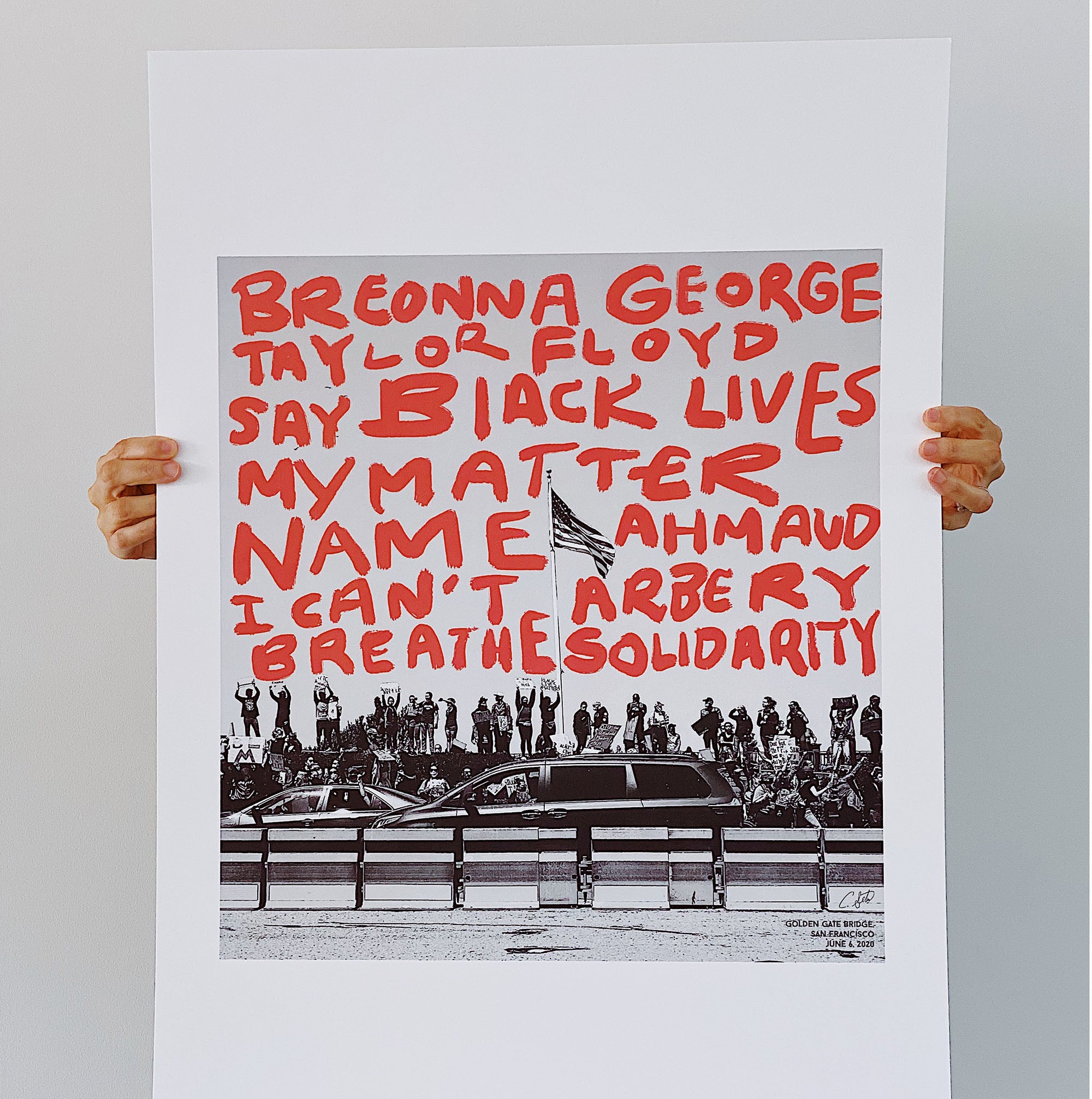
True cat'southward brand values influence the types of projects she takes on with brands and clients. "In collaborating, I think it's of import to not merely stay true to your brand," she says, "but to be able to listen and be proactive to whomever you are collaborating with."
📚 Read more:
- How to First Your Own Brand From Scratch in 7 Steps
- A Guide to Make Storytelling [Complimentary Worksheet]
How do you set prices for your art?

How do you lot sell art online—and make money doing information technology? Making a living as a working artist is possible if you know how to value and cost your work. Pricing art is challenging because it doesn't necessarily fit neatly into typical pricing strategies.
Pricing original art
The best fashion to sell art online and in person is to be profitable—and you have to cost your art accordingly. If you're just starting time to experiment with how to sell your art and don't have a widely known proper name in the art world, you tin can start with a unproblematic formula to price your original art: your time and labour costs + cloth costs and other expenses + your markup (profit). For this method, you will need to assign yourself an hourly wage. It is typical for artists to undervalue their fourth dimension and work, particularly at the beginning.
Knowing what your products correspond and what y'all aren't willing to compromise are key components in driving decisions almost pricing.
Cat Seto, Ferme à Papier
Where the formula above fails is that the value of fine art is subjective and not necessarily dependent on concrete details like fabric cost or labour hours. Famous artists tin can fetch exponentially more for a piece that has roughly the same creation costs every bit that of a new artist. Check the market to compare your pricing to similar artists at like levels and conform accordingly.
Remember that if you are selling through a gallery, that concern volition usually take half of the terminal selling toll. You can unremarkably work with gallerists, who are experts at valuing and pricing art, to set a price that makes sense for you lot, the gallery, and the marketplace.
Pricing fine art prints
Selling art prints or other types of reproduction can follow a more simple pricing formula: the price of printing + your cost to sell and market the impress + your markup. Your markup may be on a scale depending on whether you sell open- or limited-edition prints.
"Knowing what your products stand up for and what you aren't willing to compromise are cardinal components in driving decisions almost pricing," says Cat. For her, printing on sustainable paper was a must-have, even though it would drive up textile costs and ultimately the retail price. Communicating these decisions to the customer is important, particularly if your prices are higher than average.
📚 Read more:
- How to Price Your Product: What You Need to Know Most Pricing Before You Launch
- The Cost Is Right: thirteen Strategies for Finding the Platonic Price for Your Products
- Product Pricing: five Steps to Prepare Prices For Wholesale and Retail
How do you sell art online with your own ecommerce shop?

The best way to sell your art online is through your own ecommerce store. First, take a few minutes to create your store. At this indicate, y'all can set information technology up equally a trial and tinker with it for two weeks before committing. You lot've already done a lot of the work if yous've established brand guidelines, pricing, and business organisation model (originals, prints, or merch)—this part is only assembly.
Get started selling fine art online and try Shopify costless for 14 days
Shop design and themes
When setting upward your online art store, choose a Shopify theme that lets your fine art breathe–big images and lots of white/negative space. Themes are similar templates that yous build upon, layering in your own images and re-create, and tweaking colors and layout to suit your business.
🎨 Some of our theme picks for selling art online:
- Narrative (costless) is a theme for storytellers, allowing your artist persona to live front end and eye.
- Editions ($) is an blusterous theme that gives bold artwork the breathing room it deserves.
- California ($$) is a clean theme that lets your art be the star. Information technology's smashing for large collections.
- Highlight ($$) is a bold theme with slideshow and parallax scrolling features that are cracking for visual storytellers.
- Artisan ($$) is an ideal theme for artists who sell custom piece of work and commissions.

Shopify is the easiest style to sell fine art online. It'southward designed so anyone can prepare upward a custom online store with no coding or design skills necessary. Withal, if you're interested in customizing your theme even further to suit your business organisation, consider hiring a Shopify Expert to assistance you with pattern or evolution work.
📚 Read more:
- Best Ecommerce Website Designs: 27 Exceptional Sites
Apps for art stores
The Shopify App Store is packed with apps that plug directly into your online store to solve specific pain points, add together unique features, and help you run your shop more effortlessly—allowing yous to focus on the creative aspects of the concern.
🎨 App suggestions to aid sell your art online:
- Print-on-demand apps. If you sell your artwork via prints and merch, apps like Creativehub, Printful, or Printify can sync with your store, taking the burden of shipping and fulfillment out of the equation.
- Gallery apps. An app like POWR Image Gallery can characteristic past or out-of-stock works, serving as a portfolio or full catalog of your work for galleries or brands looking to partner with yous.
- Social marketing apps. As a creator, you lot may lean toward visual social media platforms like Instagram to assistance market your products and build an audience. Continue site content fresh with an app like Instafeed that pulls Instagram images into a gallery on your site.
- Product page apps. If you're offering a specific piece of artwork with overlapping options (size, frame or no frame, paper blazon, etc.), use an app like Bold Product Options to layer item variants.
📚 Read more:
- The 27 All-time Gratis Shopify Apps for Your Store
Where tin can you sell your art online?

What's the best place to sell art online? Bated from your own online store, it's the place where your ideal client is already hanging out. If y'all take amassed a following on a particular social aqueduct, for case, that might be a groovy identify to start.
Where to sell your art online:
- Online marketplaces like Etsy or eBay can plug directly into your online store, allowing yous to sync sales and accomplish wider audiences.
- Social selling channels allow y'all sell directly to fans who are already post-obit you on their preferred platforms. Create customizable storefronts on Facebook and Instagram that integrate with your Shopify store.
- Wholesale to other online boutiques and galleries. You can browse wholesale markets similar Handshake to notice compatible retailers that want to sell your art.
Cat now sells her work through multiple channels, but she cautions to commencement slow if you're simply learning how to sell artwork. "Having multiple avenues came as an evolution to what start began equally a wholesale business organization," she says. While her retail channel is on suspension for the moment, she now sells directly to client and works on custom projects for clients and brands in addition to her wholesale business organisation. "If I had tried to balance all of these from the onset," she says. "I believe I would have been overwhelmed."
Gallery exhibitions, pop-ups, and offline events for selling art

How to sell your artwork isn't limited to online—you tin sell via physical retail too. Considering Maria works frequently in traditional mediums, much of the impact of the texture and scale of her work gets lost digitally. "Information technology's actual physical work, and then when we do exhibits, you can walk into a gallery and come across that I'm a real person that has technical skills that can do paintings and big calibration installations," she says. Artists can also connect with fans and find new audiences by taking work offline. Y'all can apply in-person experiences to bulldoze people back to your online store.
🎨 Consider the following when selling your own artwork:
- Partner with a gallery to showroom work.
- Expect into local art markets and events, and set up a one-time or semi-permanent booth.
- Consign or wholesale with art, gift, or lifestyle retail stores, or set upwards a small pop-up inside an existing shop.
- Open your studio to the public when you launch your website, or keep consistent weekly open up-studio hours to invite fans into your procedure.
- Run a pop-up shop (partner with other artists to reduce costs).
- "Lend" or consign work for décor to emerging retail businesses similar cafés in substitution for the exposure.
Before Ken opened his permanent gallery, he dabbled in pop-ups as a means to build his reputation equally a gallerist and validate the business thought, but has never allow get of the physical part of the business organisation. For those selling original works, some chemical element of in-person feel is critical, says Ken. "It'southward very rare to notice a successful fine art gallery that functions entirely online."
However, advances in technology like 3D and AR for online stores and the acceleration in digital experiences brought on by the pandemic may mark big changes for the art world in the hereafter. It'due south important to follow consumer trends while you lot larn how to sell your art and abound your business.
Can you work with galleries to sell your art?
Yes, you lot can work with galleries to sell your art on your behalf. If you're not interested in how to sell your artwork yourself and instead prefer having your art represented by a gallery—or even in addition to selling prints on your ain site—there are a few dos and don'ts:
✅ Exercise check out the gallery'south social media accounts. "If you take more followers than that gallery does or that gallery doesn't take a lot of followers, that may requite you pause," says Ken. A gallery should be able to give you a wider exposure than you can get yourself.
❌ DON'T approach a gallery via social media. "Yous'd be amazed at how many people try to submit to u.s. via Facebook Messenger or tag united states of america in a postal service on Instagram and ask the states to expect at their piece of work," says Ken. "While social media is a major focus for united states, that'south just not a very professional way to come across if you're an creative person."
✅ DO your research and contact only those galleries who correspond work in line with your own style. "You tin can't sell street art to somebody who collects impressionism," says Ken.
❌ DON'T cede quality for quantity. "It'southward frustrating when an artist who's hoping to catch our attention tags united states and twenty other galleries all in the same post." Select the top few galleries that you desire to work with nigh and send private outreach to each.
✅ DO your homework. "Find the name of the director or the curator for the gallery," says Ken. "Being able to personalize an email is a swell first step in that procedure."
How do you lot marketplace your fine art store?
Many artists like Maria started on social media as the best fashion to sell art online, growing a following kickoff before launching a store and monetizing their piece of work. The channel where you've gained the nigh traction in the starting time is a natural identify to spend your free energy and marketing dollars first.
🎨 More ideas to get traffic to your site—and make sales:
- Run paid ad campaigns on platforms like Google or Facebook.
- Invest in organic social by producing consistent content and engaging with fans and fine art communities oftentimes.
- Run contests or offer exclusive discounts to social followers (bonus: apply these to help build your email list).
- Reach out to influencers and press when you lot launch your site or a new collection. Equally you scale, yous may opt to outsource to a PR firm.
- Use content marketing to bulldoze organic traffic. Use your expertise to create content around art, how-tos, behind the scenes, etc., either through a weblog, vlog, or podcast.
- Learn about SEO to assistance improve your shop'due south discoverability.
- Drive exposure with offline marketing. Participate in art shows and markets or work with a gallery to expand your reach to new, larger audiences.
📚 Read more than:
- Increase Website Traffic: 20 Low-Cost Ideas
- SEO Checklist: How to Rank a New Website
- Authenticity Sells: A Beginner'southward Guide to Marketing on TikTok
- Printing Kits: How to Create A Hype Media Kit
How do you lot package and ship art?

Every bit art is visual, you should pay attention to the smallest details, downwardly to how your art is packaged and shipped. Fine art that arrives undamaged is the bare minimum—give your customers an experience that matches the quality and care you put into your work. As art can be delicate, follow these guidelines for ensuring your work arrives safety and sound.
DIY shipping fine art
If you are shipping original art, or elect to ship prints and canvases yourself, rather than through a print and fulfillment visitor, take extra precaution with your packing. Larger prints and posters are best shipped in paper-thin mailing tubes, and smaller prints in rigid cardboard mailing envelopes. Use glassine (a h2o and grease-resistant newspaper) or clear cellophane sleeves to protect prints within the packaging. Remember: the best manner to sell your art online is to make sure information technology arrives in mint condition as a bare minimum.
Aircraft expensive and oversized original artwork
Framed works and canvases require additional precautions—they're certainly not the "easiest" way to sell art online in terms of shipping. Packaging supply shops offer packing and aircraft materials like cardboard corners and specialty box sizes designed specifically for fine art.
If you're shipping original work to a gallery or art collector, there are means to cut costs. "The cost to send an oversized painting that's stretched on a canvas tin be pretty substantial," says Ken. "Sometimes what nosotros do is unstretch a canvass, roll information technology in a tube, and send it that style, which dramatically lowers the freight costs. And so we can have the canvas stretched locally."
Shipping art direct with print on need
The easiest manner to manage shipping is to non manage it at all. If you opt to sell prints or merch only, your press, order fulfillment, and shipping tin all exist managed past your print-on-need partner. They are able to access great shipping rates due to volume and partnerships with carriers.
Shipping insurance for fine fine art
Insurance is of import when shipping original works, as a lost or damaged package can't be replaced. Many standard carriers offer fairly bones insurance on most packages, and if you sell your art you should look into the specific extra coverage costs and limitations of each carrier's insurance offerings.
If y'all're selling your own artwork at high price points, Ken takes additional measures to ensure the safety of the piece of work. "Shipping annihilation worth more than a thousand dollars is definitely tricky," he says, and suggests that artists look into using a private freight company or a carrier that specializes in fine art handling, despite the college costs.
📚 Read more:
- Aircraft & Fulfillment 101: A Pace-By-Pace Guide for Getting Your Products to Your Customers
Plagiarism problems and copyright protection when selling art
Artist Tuesday Bassen waged state of war on copycats—big concatenation stores who ripped off her original designs—by hiring a lawyer and taking her story to the media. However, both Maria and Ken say copycats and plagiarism are just an unfortunate reality of doing business organisation. Maria took legal action only once, earlier shifting her perspective. "At the terminate of the day, information technology took me my whole life to learn how to do this," she says. "If somebody is copying me, they're going to have to sit down and eventually learn for themselves, considering sooner or later on they're going to run out of ideas."
Information technology'southward a sign that I'1000 inspiring others and that what I'm doing is right considering they wouldn't copy me otherwise.
Maria Qamar, Hatecopy
Maria takes Hatecopy'due south copycats as an indication that she's on to something."Information technology's a sign that I'1000 inspiring others and that what I'yard doing is right because they wouldn't copy me otherwise," she says, "I'm not offended or bothered by it anymore."
For galleries that represent multiple artists and sell art online, copycat websites are a consistent problem. "We do accept an issue with various online sites but bootlegging what nosotros do," says Ken. "Information technology'south part of the way the globe works, unfortunately. We practise our all-time, but it happens."
While copycats may be a reality, artists and businesses have legal recourse and should seek the advice of a copyright lawyer to help protect intellectual property before infringement happens.
The creative person every bit an entrepreneur

For many entrepreneurs, the all-time manner to sell art online is from any space you already have—not some expansive warehouse or inviting storefront. Cat started her fine art business organisation from a spare bedroom. Whether it's a basement or a kitchen tabular array or a guest room, it can work equally your launching pad. In this stage of your business, yous'll wear all the hats: creator, marketer, packer, shipper, web designer, and customer service rep.
Cat describes this fourth dimension in her ain journey equally lean and humbling. "It gave me assurance of knowing every aspect of my business organisation inside and out," she says, "including its strengths and weaknesses."
You could know everything well-nigh business and yous could know everything about art, but it'due south the combination of both that really makes a successful brand.
Maria Qamar, Hatecopy
Thinking of yourself as an entrepreneur right from the start will be crucial to your success. You lot may stumble as a creative to larn the business concern aspects, merely they will ultimately assist you abound and scale. Eventually, y'all tin can delegate and automate, allowing you to focus on what you do best: making cute things.
"You could know everything about business and y'all could know everything virtually art, but information technology's the combination of both that actually makes a successful brand," says Maria. "I am obsessed with creating that harmony."
Feature illustration past Pete Ryan
Selling art online FAQ
What is the all-time style to sell fine art online?
The all-time way to sell art online is past edifice your own branded ecommerce site with a platform similar Shopify. You can also sell your work on a crafts and art market like Etsy or on social media platforms like Instagram and Facebook Shops. Understand where your target customers similar to shop to find out the all-time place to sell your art online.
Is selling art online profitable?
Yes, selling art online can exist profitable if you're intentional about your pricing and marketing strategies. Selling fine art online has go more accessible with platforms similar Etsy and Facebook, which enable ecommerce. Note: When yous sell on your own online store congenital with a platform like Shopify, you don't have to pay marketplace fees.
How tin I sell my original art online?
Selling original art online is even so possible through your own branded website. Cost point for original fine art volition be much higher, so information technology's important that you lot build a potent, loyal audience for your work. Diversifying your sales channels, like also working with a gallery, volition assist y'all broaden your exposure as an artist.
What art sells the most?
This is a tricky question considering art is very broad and subjective. Selling prints of your work can be very profitable because you tin can continue to generate income from a single piece. Lower cost points (versus original fine art) mean you likely can sell more volume. Curators should follow trends in art and design to help understand what art collectors and potential customers are buying, then work with artists that take loftier success potential. Equally a creator, you should lean into the style that you do best and build a following from at that place.
hardtsplaccut1946.blogspot.com
Source: https://www.shopify.com/blog/211990409-how-to-sell-art-online
0 Response to "Should I Display My Own Reproduction Art on Website"
Post a Comment